
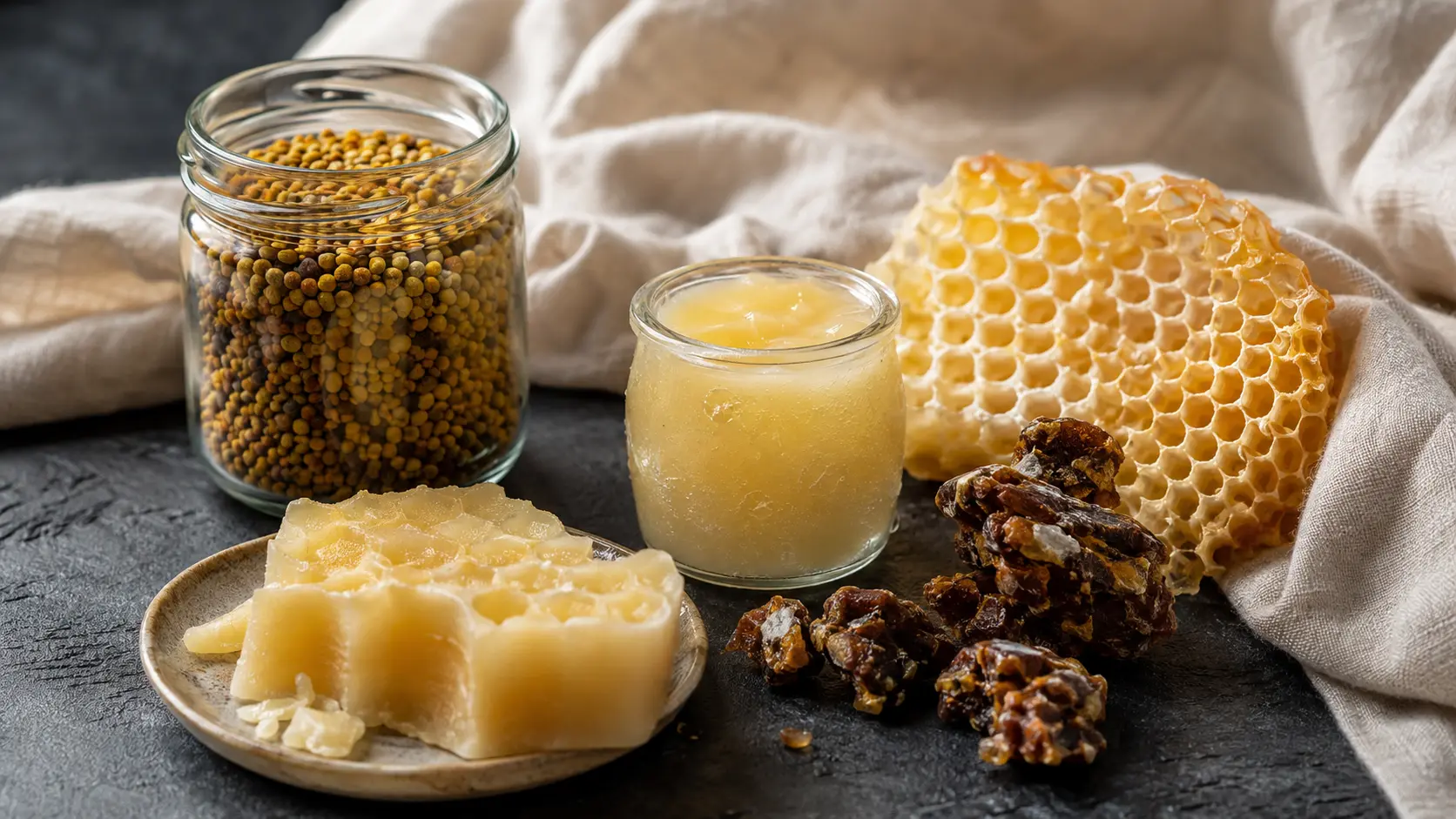
Royal Jelly Storage and the Cold Chain
Some products require continuous refrigeration according to the label, making transport and time outside cold storage part of quality.
Read the full guide →Khitam World Honey Journal
The editorial archive
Some products require continuous refrigeration according to the label, making transport and time outside cold storage part of quality.
Read the full guide →Understand the product fed to selected larvae while separating its biology from therapeutic promises needing stronger evidence.
Read the full guide →Clear source, sealed packaging, date, storage and delivery policy matter more than colourful images or brief reviews.
Read the full guide →Separate variable nutrient content from unproven fertility or performance promises and direct persistent symptoms to medical assessment.
Read the full guide →Honey is a sweet liquid or crystallised food; bee pollen is bee-processed plant granules, and the two are not automatic substitutes.
Read the full guide →Before blending, review allergies, other ingredients, total sweetness and product directions, then choose a simple traceable recipe.
Read the full guide →Learn serving, label and practical portion basics while recognising that mixing does not remove allergy risk or create a treatment.
Read the full guide →Colours and flavours range from floral to herbal, so start by describing the product rather than hiding it in a large blend.
Read the full guide →Blends, herbs and extracts may add interactions or allergy risk, so the full label should be shown to a doctor or pharmacist.
Read the full guide →Natural does not erase total sugar; heart health rests on dietary pattern, blood pressure, lipids, activity and care when needed.
Read the full guide →It may add carbohydrate within a suitable plan, but cannot replace training, sleep, protein, fluids or treatment of a deficiency.
Read the full guide →Ask about study type, dose, product and outcome before translating laboratory or animal findings into human treatment.
Read the full guide →A small amount can be used in food or drink, but sleep quality depends on habits and causes broader than honey.
Read the full guide →Protein, grains or bread, fruit, fluids and a measured spoon of honey work better than a magical pre-activity recipe.
Read the full guide →Separate short-term food energy from treating the cause of fatigue and learn when medical assessment matters more than another ingredient.
Read the full guide →Honey provides sweetness and carbohydrate in a measured portion, but does not by itself treat hormones, fertility or fatigue.
Read the full guide →Begin with a few clearly labelled, properly stored products rather than a large box of similar blends and inflated promises.
Read the full guide →A decision guide separates source, texture, storage, allergy and use so the customer understands what is being bought.
Read the full guide →A hive-stored product undergoes changes different from collected granules and needs clear labelling and suitable storage.
Read the full guide →Distinguish wax intended for food, cosmetics or industry and never assume every piece is suitable for eating.
Read the full guide →
High storage, a tight lid, clean spoon, clear blend labels and a fixed infant rule make household use easier.
Read the full guide →The issue often lies in added herbs or extracts rather than honey alone, so review the complete list rather than the front name.
Read the full guide →Use a standard spoon and compare free pouring with a defined amount so the nutrition decision is clear without fear.
Read the full guide →Natural sweetness does not remove the effect of frequent sugars, so serve with meals and use dental care rather than all-day sipping.
Read the full guide →