
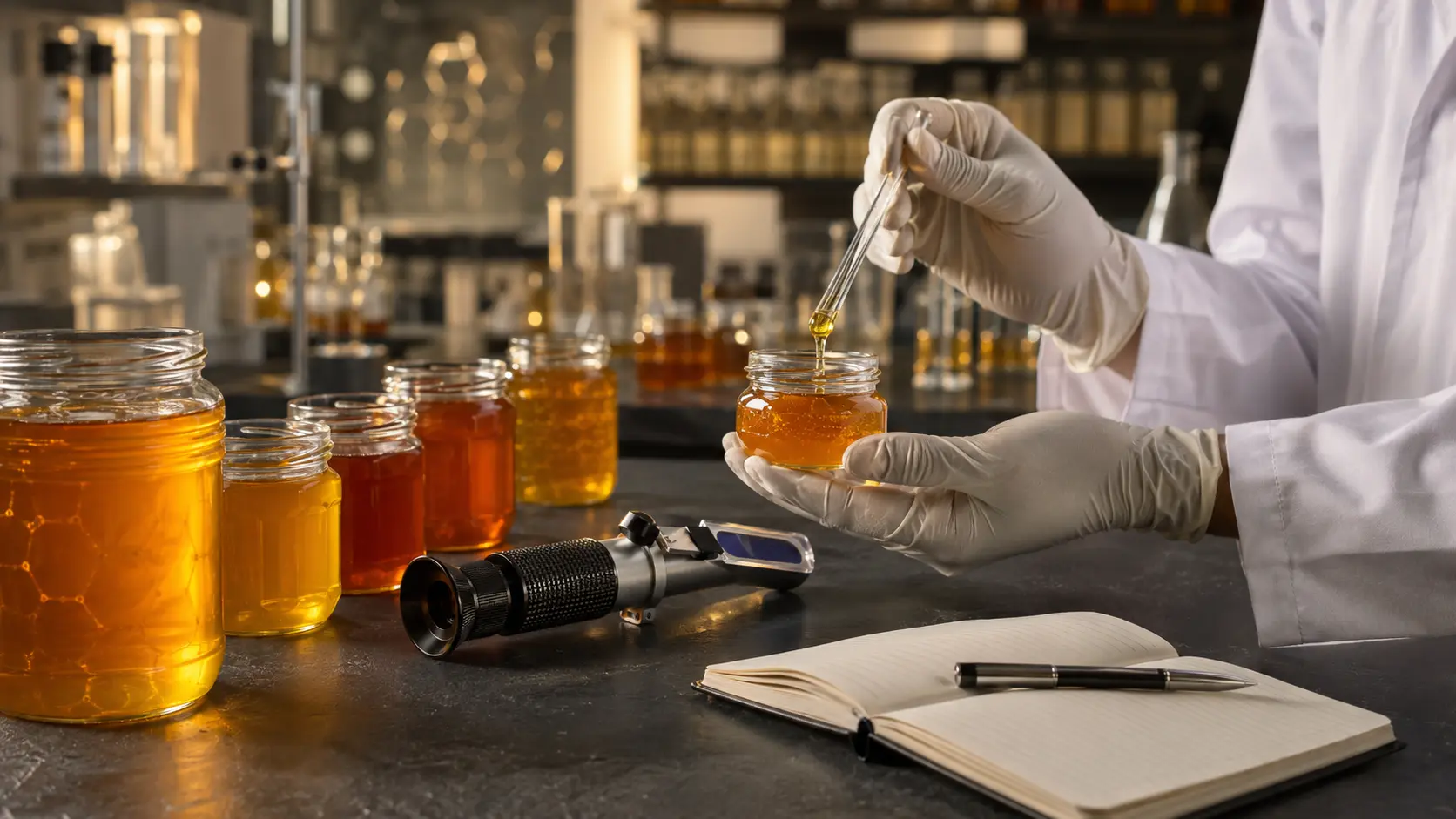
Moisture Results in Honey Testing: What Do They Mean?
Moisture is placed in context with storage, texture and sampling, without turning one result into a complete verdict.
Read the full guide →Khitam World Honey Journal
The editorial archive
Moisture is placed in context with storage, texture and sampling, without turning one result into a complete verdict.
Read the full guide →A guide to sample identity, units, limits and results so a report can be matched to the batch rather than admired as an image.
Read the full guide →Ten practical checks cover the laboratory, sample, date, batch, units, signature and access to the complete document.
Read the full guide →Without knowing who sampled, sealed and transported the jar, a result is harder to connect to the disputed or supplied product.
Read the full guide →Strong assessments combine commercial records, documented samples and suitable laboratory methods instead of one visual trick.
Read the full guide →Specialists examine the pollen spectrum against flora and geography rather than looking for one decisive grain.
Read the full guide →The measure relates to mineral content and botanical origin and supports classification within a system, not as a home test.
Read the full guide →Glucose, fructose and other sugars create a useful comparison pattern, but interpretation requires a suitable method and context.
Read the full guide →A professional explanation of enzyme activity, natural variation and handling, and why the number belongs beside other indicators.
Read the full guide →HMF can help interpret heat and time under test conditions, but cannot tell the complete story of source or authenticity.
Read the full guide →