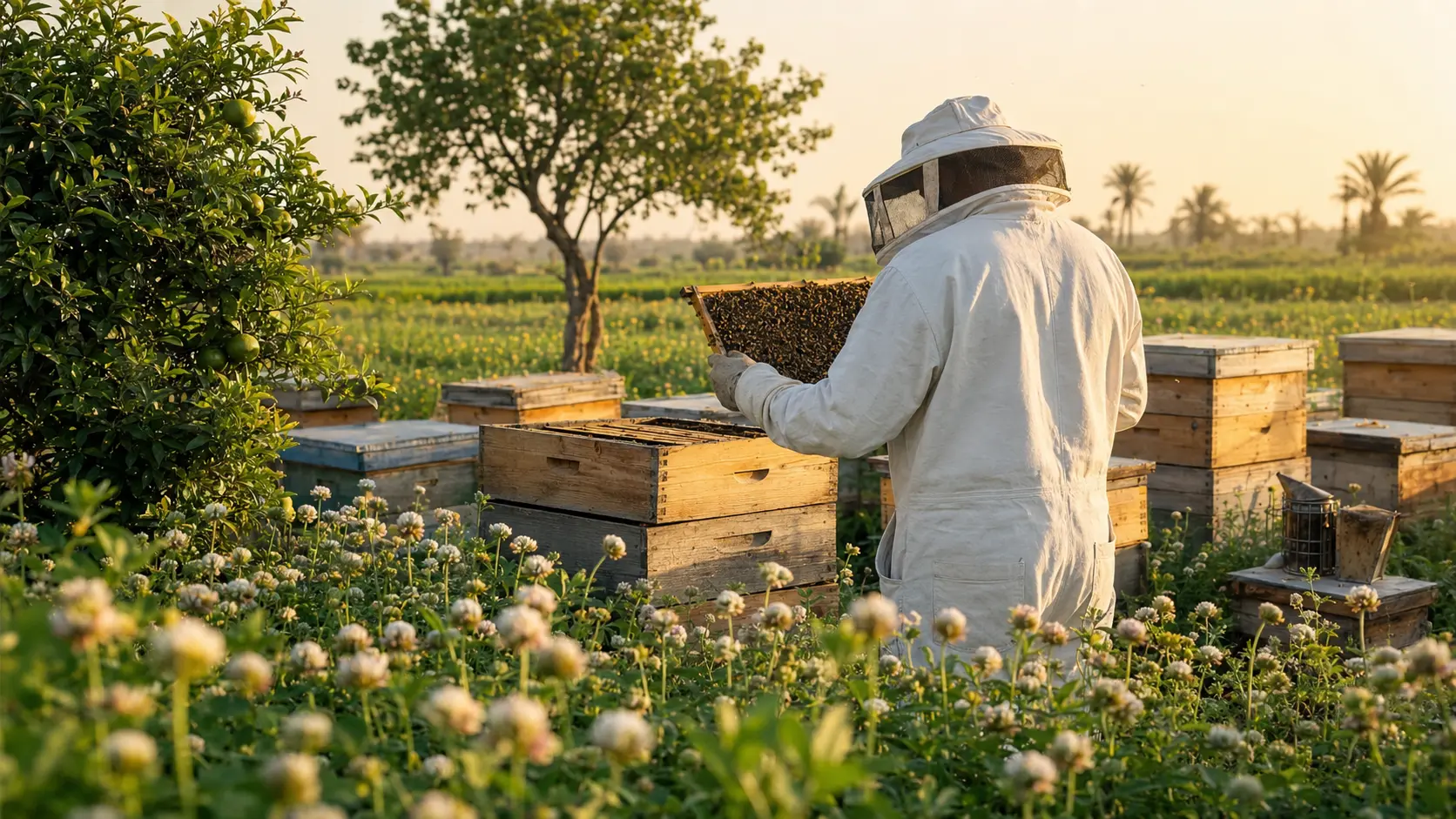
Desert Apiaries in Egypt: Opportunities and Challenges
Water scarcity, dispersed forage and heat make desert beekeeping a story of planning and care, not merely scenery.
Read the full guide →Khitam World Honey Journal
The editorial archive
Water scarcity, dispersed forage and heat make desert beekeeping a story of planning and care, not merely scenery.
Read the full guide →Learn the difference between floral-source honey and honey mixed with seeds or oil, and why the label must make it clear.
Read the full guide →A guide to citrus bloom season, delicate flavour, batch selection and pairings that preserve its aroma.
Read the full guide →Explore clover's link to the Nile Delta and the balanced flavour and natural crystallisation a taster may encounter.
Read the full guide →Pair two contrasting Egyptian varieties with an origin card and secure packaging so the box becomes a tasting experience.
Read the full guide →Responsible buying balances fair price, transparency, quality and continuity rather than chasing the lowest price or a story alone.
Read the full guide →A batch number, supply record, packing date and sample-linked certificate turn origin into something checkable rather than a slogan.
Read the full guide →Terroir is used carefully to explain environmental influence without claiming that flavour alone proves a governorate or apiary.
Read the full guide →A region name begins the question rather than ending it; dominant flora, foraging range, season and supplier records matter.
Read the full guide →An indicative map links clover, citrus and seasonal plants to weather while recognising annual and local shifts.
Read the full guide →