
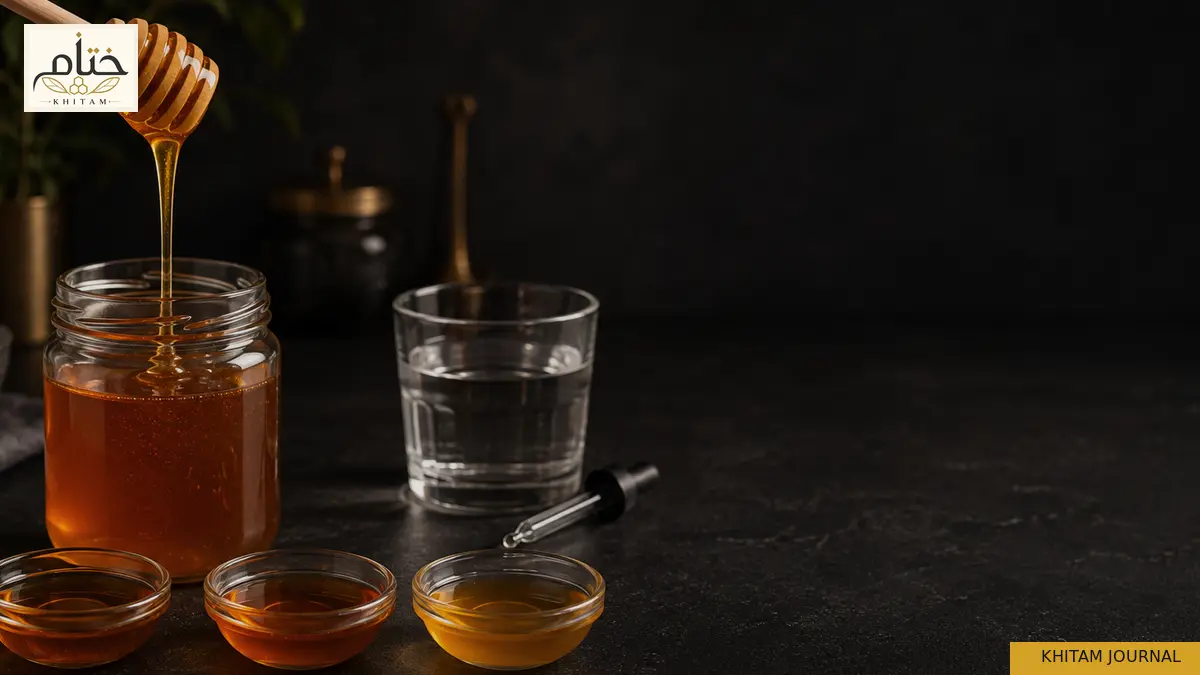
Honey and Boiling Water: Flavour Versus Alarmist Claims
High heat may change aroma and some quality indicators, but flavour quality must be separated from unsupported toxin stories.
Read the full guide →Khitam World Honey Journal
The editorial archive
High heat may change aroma and some quality indicators, but flavour quality must be separated from unsupported toxin stories.
Read the full guide →Brief contact with a clean food utensil differs from storage in reactive metal; cleanliness and dryness matter most.
Read the full guide →High stability does not erase moisture, contamination, packaging or added blends, so storage instructions still matter.
Read the full guide →Room temperature, moisture and variety change flow, so jars need comparable conditions and context.
Read the full guide →Colour reflects source, season and storage; the better choice depends on flavour, use and transparency rather than shade.
Read the full guide →Cold raises viscosity and may accelerate crystallisation depending on sugars, while pure and mixed products can behave differently.
Read the full guide →Ant behaviour depends on species, location, odours and other food sources and cannot certify a jar.
Read the full guide →Moisture, wick and conditions change ignition; fire does not measure authenticity and can cause injury.
Read the full guide →Droplet spread describes viscosity at one moment, which changes with weather and variety and cannot settle adulteration.
Read the full guide →Dissolving speed changes with temperature, moisture and texture and cannot reveal sugar origin or compliance alone.
Read the full guide →