
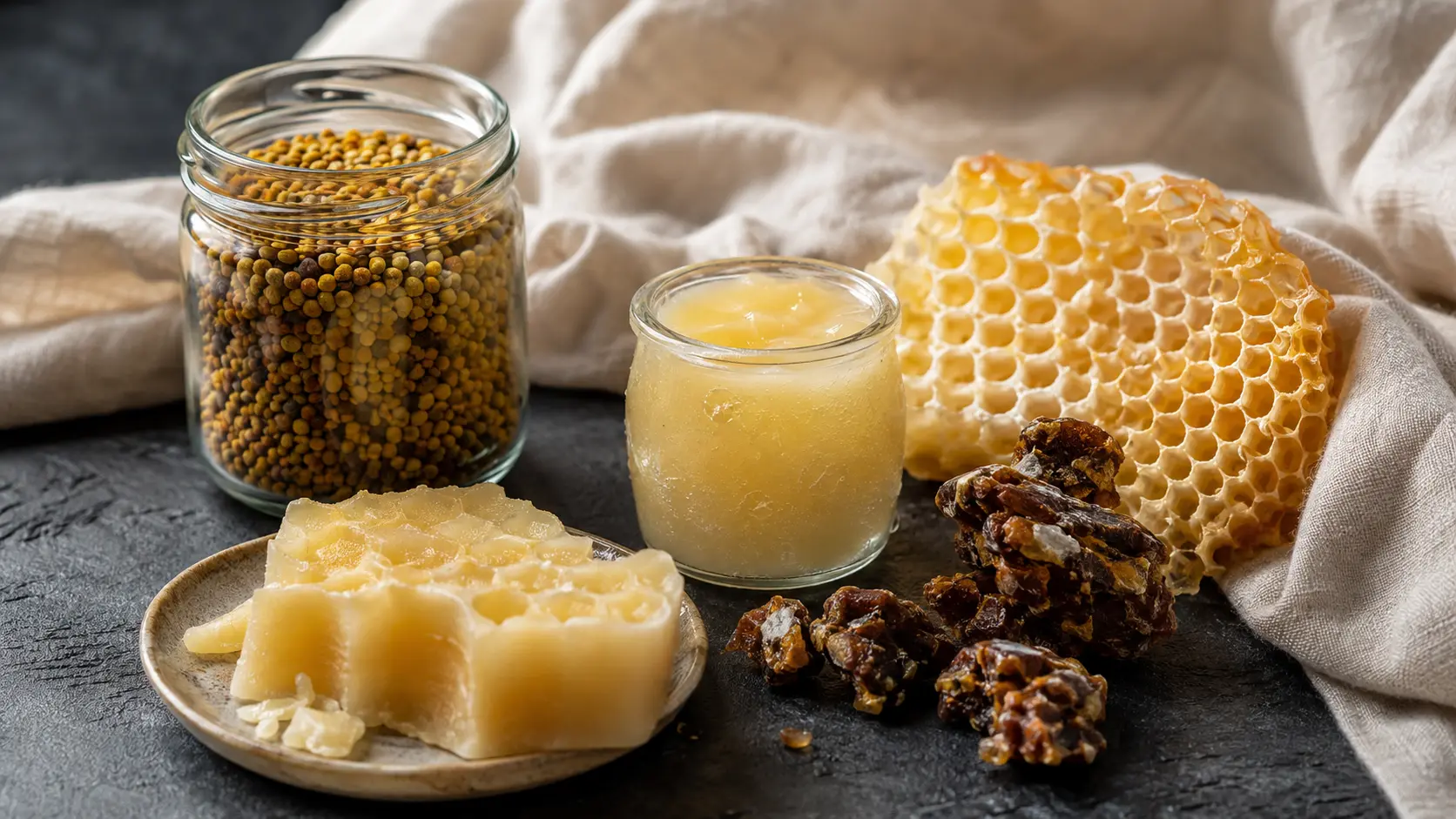
Propolis and Allergy: Important Checks Before Use
A bee product can trigger skin or other reactions in some people, making allergy history more important than popularity.
Read the full guide →Khitam World Honey Journal
The editorial archive
A bee product can trigger skin or other reactions in some people, making allergy history more important than popularity.
Read the full guide →Look for extract type, concentration, solvent, volume and warnings rather than relying on a dropper image and dark colour.
Read the full guide →Format, concentration, solvent and added ingredients change use and storage, so products cannot be compared by name alone.
Read the full guide →Distinguish pure royal jelly from honey blends and review actual amount and ingredients before comparing prices.
Read the full guide →Some products require continuous refrigeration according to the label, making transport and time outside cold storage part of quality.
Read the full guide →Understand the product fed to selected larvae while separating its biology from therapeutic promises needing stronger evidence.
Read the full guide →Begin with a few clearly labelled, properly stored products rather than a large box of similar blends and inflated promises.
Read the full guide →A decision guide separates source, texture, storage, allergy and use so the customer understands what is being bought.
Read the full guide →A hive-stored product undergoes changes different from collected granules and needs clear labelling and suitable storage.
Read the full guide →Distinguish wax intended for food, cosmetics or industry and never assume every piece is suitable for eating.
Read the full guide →