
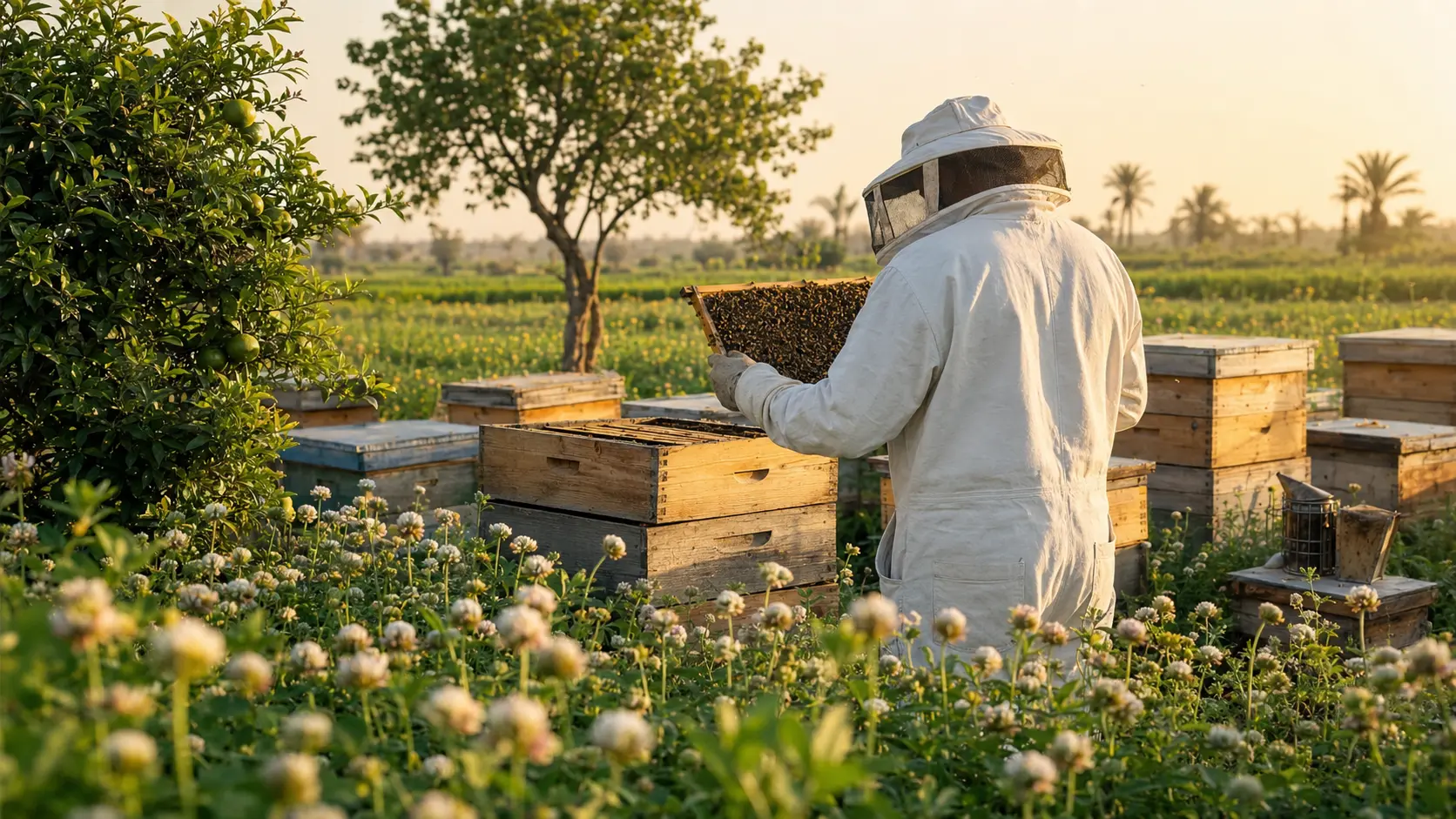
Why Do Bees Collect Pollen?
Pollen is a colony food resource different from nectar and is stored and processed inside the hive in distinct ways.
Read the full guide →Khitam World Honey Journal
The editorial archive
Pollen is a colony food resource different from nectar and is stored and processed inside the hive in distinct ways.
Read the full guide →Movement, direction and duration convey food-source information within a wider sensory and environmental context.
Read the full guide →Scent, colour, location and learning help a bee choose a food source and return efficiently.
Read the full guide →Learn the roles of queen, workers and drones and how a worker's tasks change with age and colony needs.
Read the full guide →Flower visits support many plants and crops, and honey is only one part of pollinators' value to food and ecosystems.
Read the full guide →The beekeeper balances surplus removal with colony needs and monitors food and weather after harvest.
Read the full guide →Brood pattern, behaviour, stores, queen and pests give a broader view than harvested honey weight alone.
Read the full guide →Swarming is natural colony reproduction; contact a beekeeper or appropriate service rather than spraying or approaching.
Read the full guide →Inspection, feeding when needed, queen and pest monitoring and honey preparation change with weather and colony state.
Read the full guide →Activity rises or falls with temperature, bloom and stores, and management decisions differ across regions and seasons.
Read the full guide →