
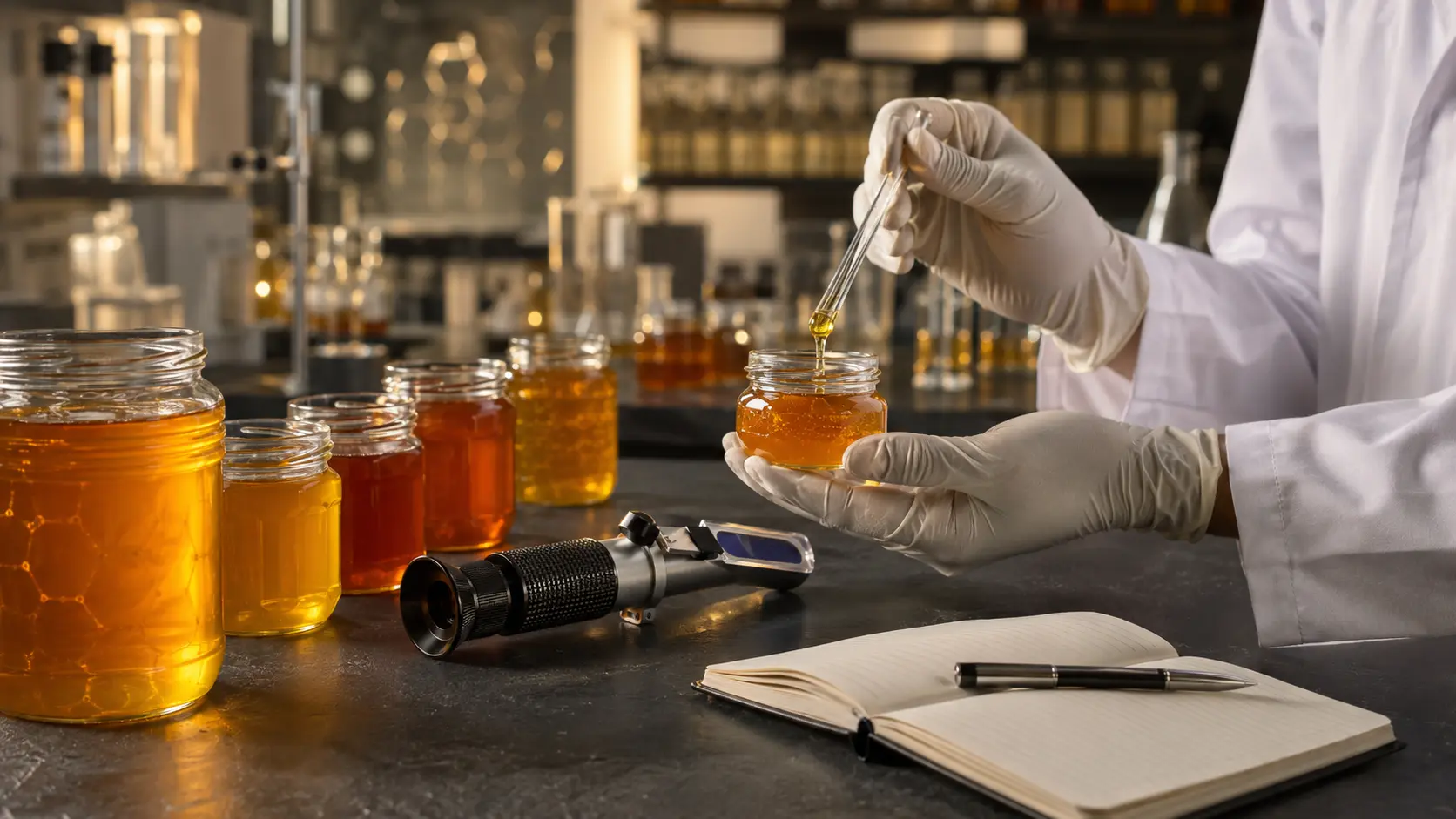
Why Does Honey Aroma Vary? A Guide to Volatile Compounds
Flora, storage and serving temperature create aroma layers, so structured smelling reveals more than calling honey merely sweet.
Read the full guide →Khitam World Honey Journal
The editorial archive
Flora, storage and serving temperature create aroma layers, so structured smelling reveals more than calling honey merely sweet.
Read the full guide →This guide separates perceived acidity from laboratory measurement and shows how acids balance sweetness and aroma.
Read the full guide →Enzymes vary with source, time and heat, making them useful within a full analysis but not a treatment promise or standalone verdict.
Read the full guide →Moisture helps explain fluidity and stability, but it should be read alongside sample conditions and other quality results.
Read the full guide →A practical journey through nectar collection, moisture reduction and cell storage without oversimplification or fantasy.
Read the full guide →A clear look at honey's main components and how changing proportions shape sweetness, texture and aroma from one batch to another.
Read the full guide →Weather, bloom timing, water and surrounding flora explain traceable natural variation rather than automatic defect.
Read the full guide →Learn to distinguish packing air from growing foam with odour or pressure that deserves a storage and seller review.
Read the full guide →Glucose-fructose balance, temperature and fine particles alter crystallisation speed without proving purity or adulteration alone.
Read the full guide →Colour reflects flora, season and storage rather than a simple quality ladder; fair comparison stays within variety and batch.
Read the full guide →