
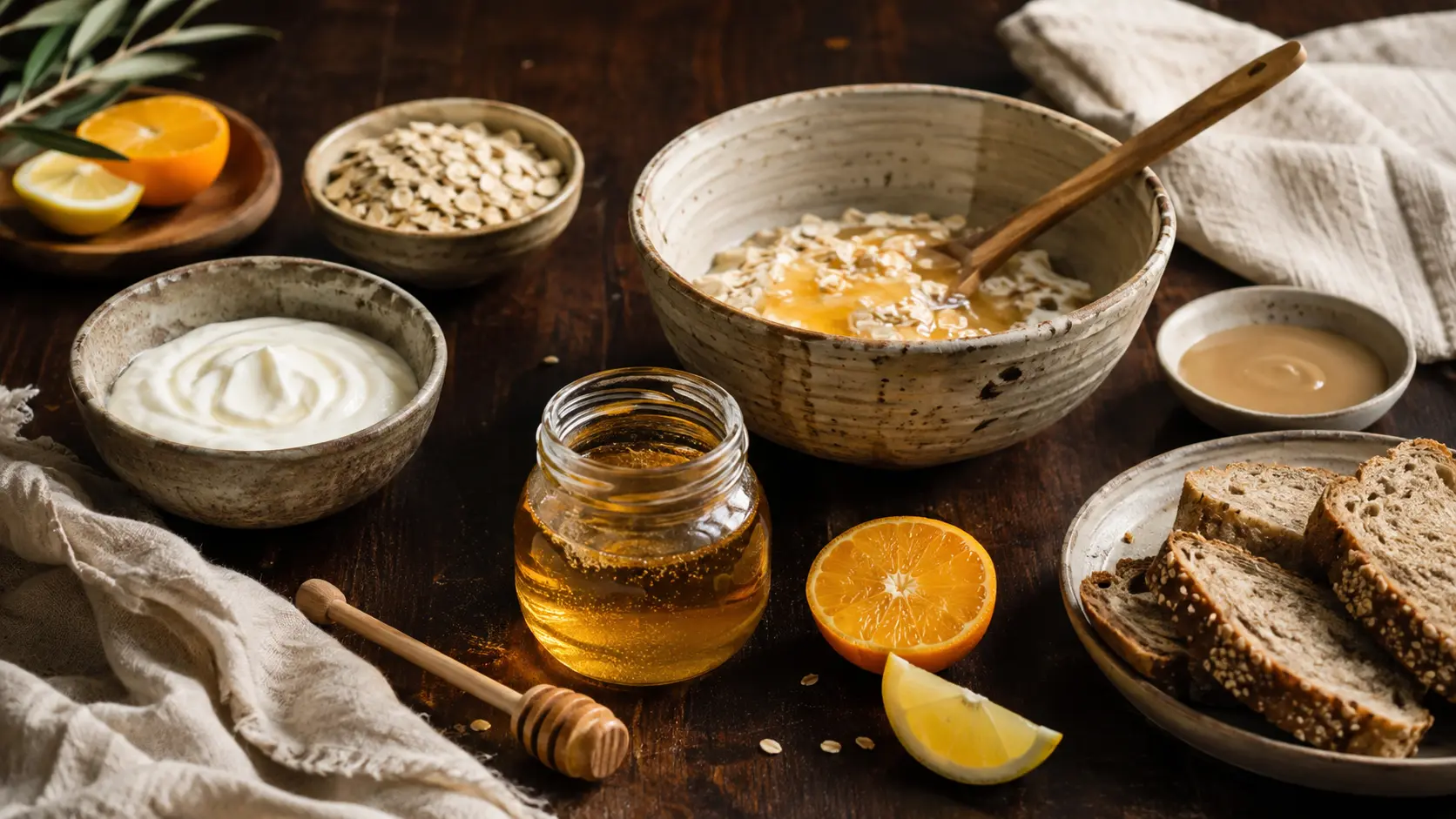
A Practical Guide to Replacing Some Sugar with Honey
An experimental method separates drinks, sauces and baking and avoids using one ratio across very different recipes.
Read the full guide →Khitam World Honey Journal
The editorial archive
An experimental method separates drinks, sauces and baking and avoids using one ratio across very different recipes.
Read the full guide →Honey acts as a connector in sauce rather than a solo star; salt, acid and fat define its place in balance.
Read the full guide →Balance acid, herbs, bubbles and honey and pre-measure the portion for an elegant drink that is not overly sweet.
Read the full guide →Dissolve honey first in a little lukewarm liquid, then chill the base so it does not sit in a lump at the bottom.
Read the full guide →Reduce another liquid when needed, watch the top early and choose a variety that does not overpower vanilla or spice.
Read the full guide →Honey feeds yeast and adds colour and moisture, but its effect depends on flour, water and time rather than one universal ratio.
Read the full guide →Adjust liquids and baking temperature and test part of the recipe because honey changes more than sweetness.
Read the full guide →A measured addition near the end brings gloss and balance without burning sugars or masking the vegetables.
Read the full guide →Honey speeds browning, so control portion, heat and timing, and keep raw marinade separate from serving sauce.
Read the full guide →Build a small dressing from acid, oil, honey and seasoning, then adjust by taste rather than overwhelming the salad.
Read the full guide →