
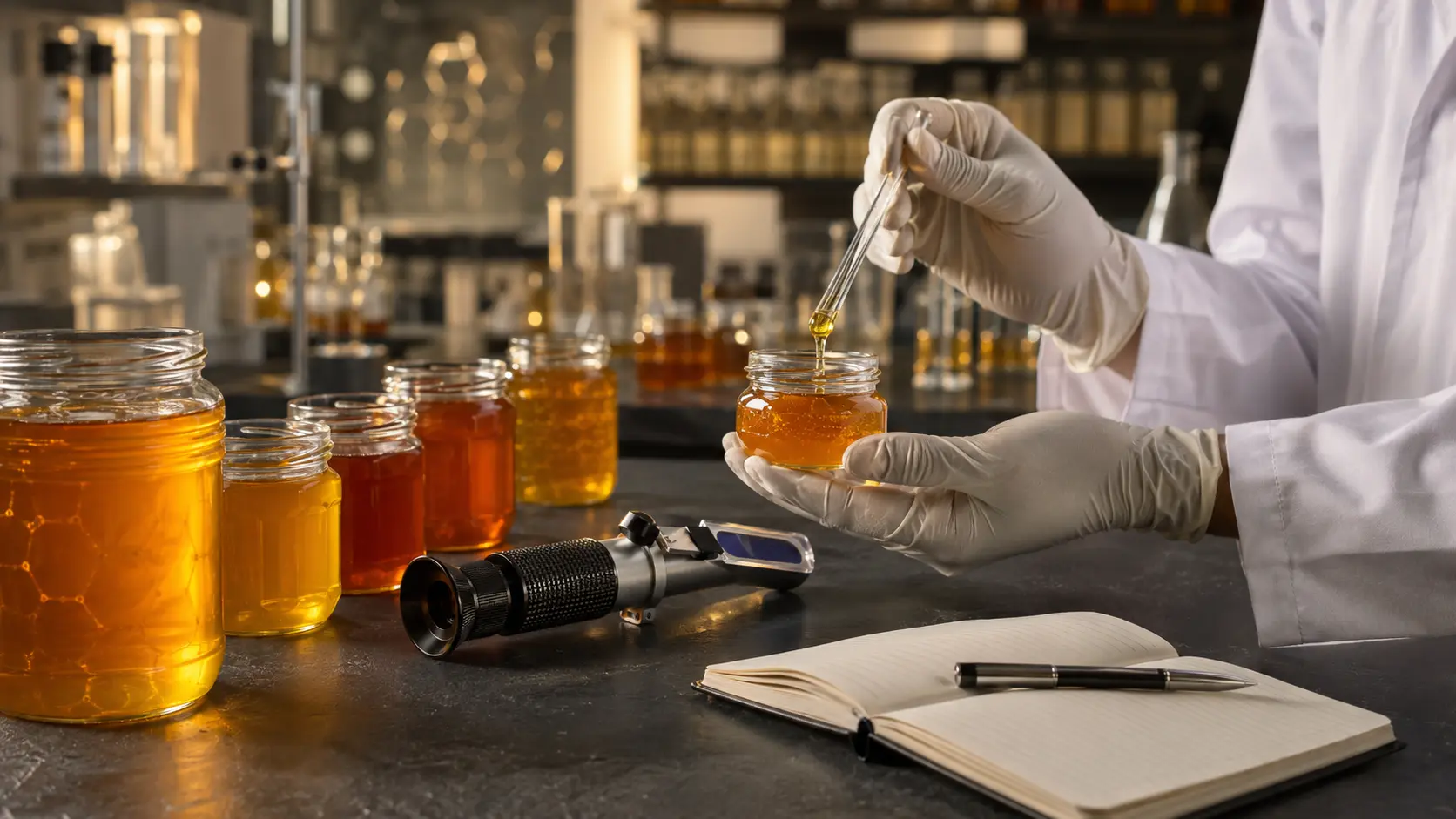
How to Read a Honey Laboratory Report Step by Step
A guide to sample identity, units, limits and results so a report can be matched to the batch rather than admired as an image.
Read the full guide →Khitam World Honey Journal
The editorial archive
A guide to sample identity, units, limits and results so a report can be matched to the batch rather than admired as an image.
Read the full guide →Weather, bloom timing, water and surrounding flora explain traceable natural variation rather than automatic defect.
Read the full guide →Learn to distinguish packing air from growing foam with odour or pressure that deserves a storage and seller review.
Read the full guide →Glucose-fructose balance, temperature and fine particles alter crystallisation speed without proving purity or adulteration alone.
Read the full guide →Colour reflects flora, season and storage rather than a simple quality ladder; fair comparison stays within variety and batch.
Read the full guide →
A simple table of ingredients, weight, price, serving and storage reveals value better than marketing names.
Read the full guide →Review every ingredient, allergy and medicine, treating the blend as food rather than fertility or hormone treatment.
Read the full guide →Compare honey weight, saffron disclosure, origin and packaging; price alone does not prove thread quality.
Read the full guide →Extract type, concentration, solvent and cautions define the product more than its dark bottle.
Read the full guide →A declared amount differs from a product using the name alone, and storage guidance is part of quality.
Read the full guide →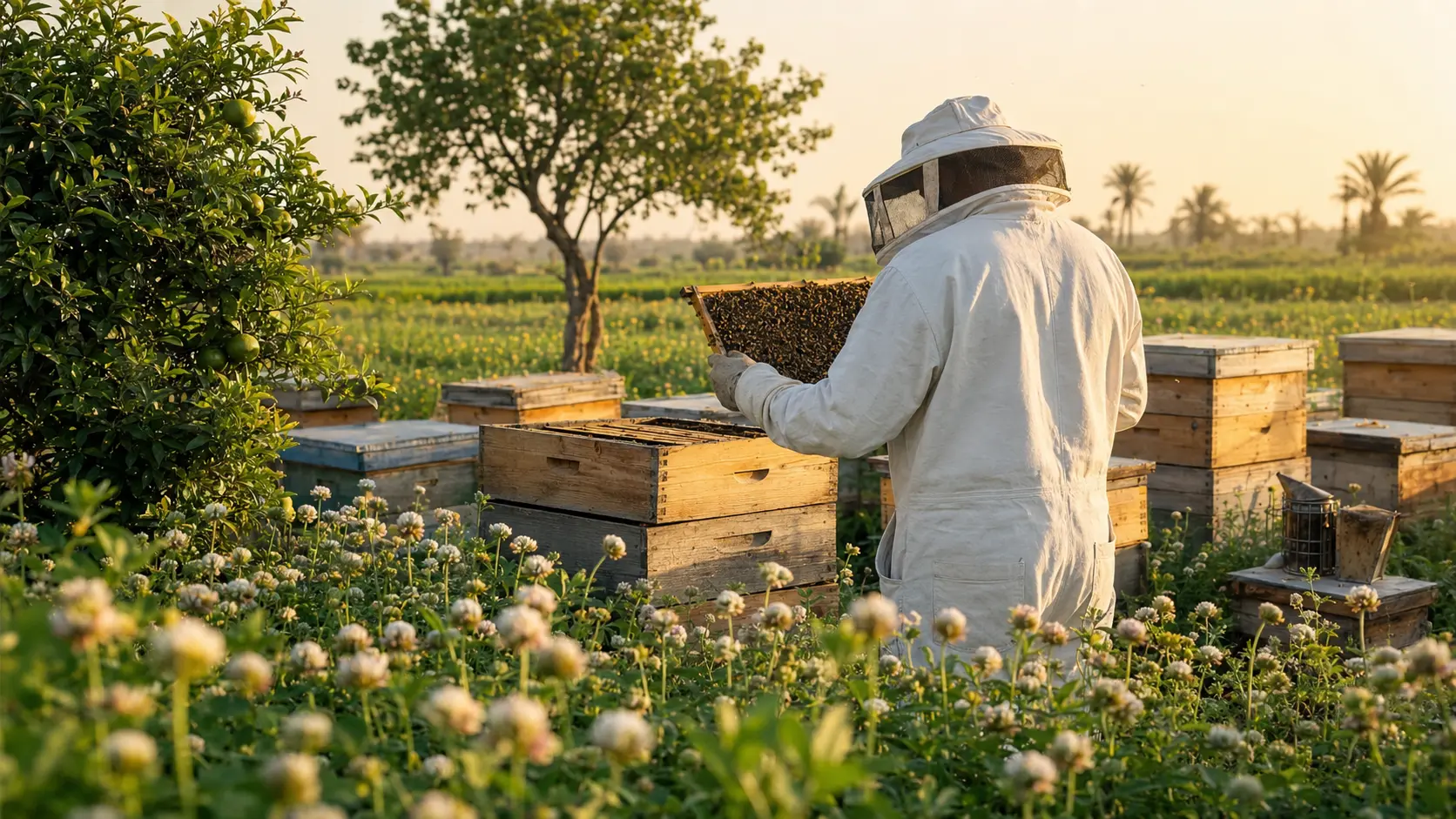
Water scarcity, dispersed forage and heat make desert beekeeping a story of planning and care, not merely scenery.
Read the full guide →Learn the difference between floral-source honey and honey mixed with seeds or oil, and why the label must make it clear.
Read the full guide →A guide to citrus bloom season, delicate flavour, batch selection and pairings that preserve its aroma.
Read the full guide →Explore clover's link to the Nile Delta and the balanced flavour and natural crystallisation a taster may encounter.
Read the full guide →Ten practical checks cover the laboratory, sample, date, batch, units, signature and access to the complete document.
Read the full guide →Without knowing who sampled, sealed and transported the jar, a result is harder to connect to the disputed or supplied product.
Read the full guide →Strong assessments combine commercial records, documented samples and suitable laboratory methods instead of one visual trick.
Read the full guide →Specialists examine the pollen spectrum against flora and geography rather than looking for one decisive grain.
Read the full guide →The measure relates to mineral content and botanical origin and supports classification within a system, not as a home test.
Read the full guide →Glucose, fructose and other sugars create a useful comparison pattern, but interpretation requires a suitable method and context.
Read the full guide →A professional explanation of enzyme activity, natural variation and handling, and why the number belongs beside other indicators.
Read the full guide →HMF can help interpret heat and time under test conditions, but cannot tell the complete story of source or authenticity.
Read the full guide →Test honey in the recipe and calculate serving cost and supply consistency before recurring purchase.
Read the full guide →Serving format, allergens, batches, delivery, storage and continuity come before the prettiest jar.
Read the full guide →