
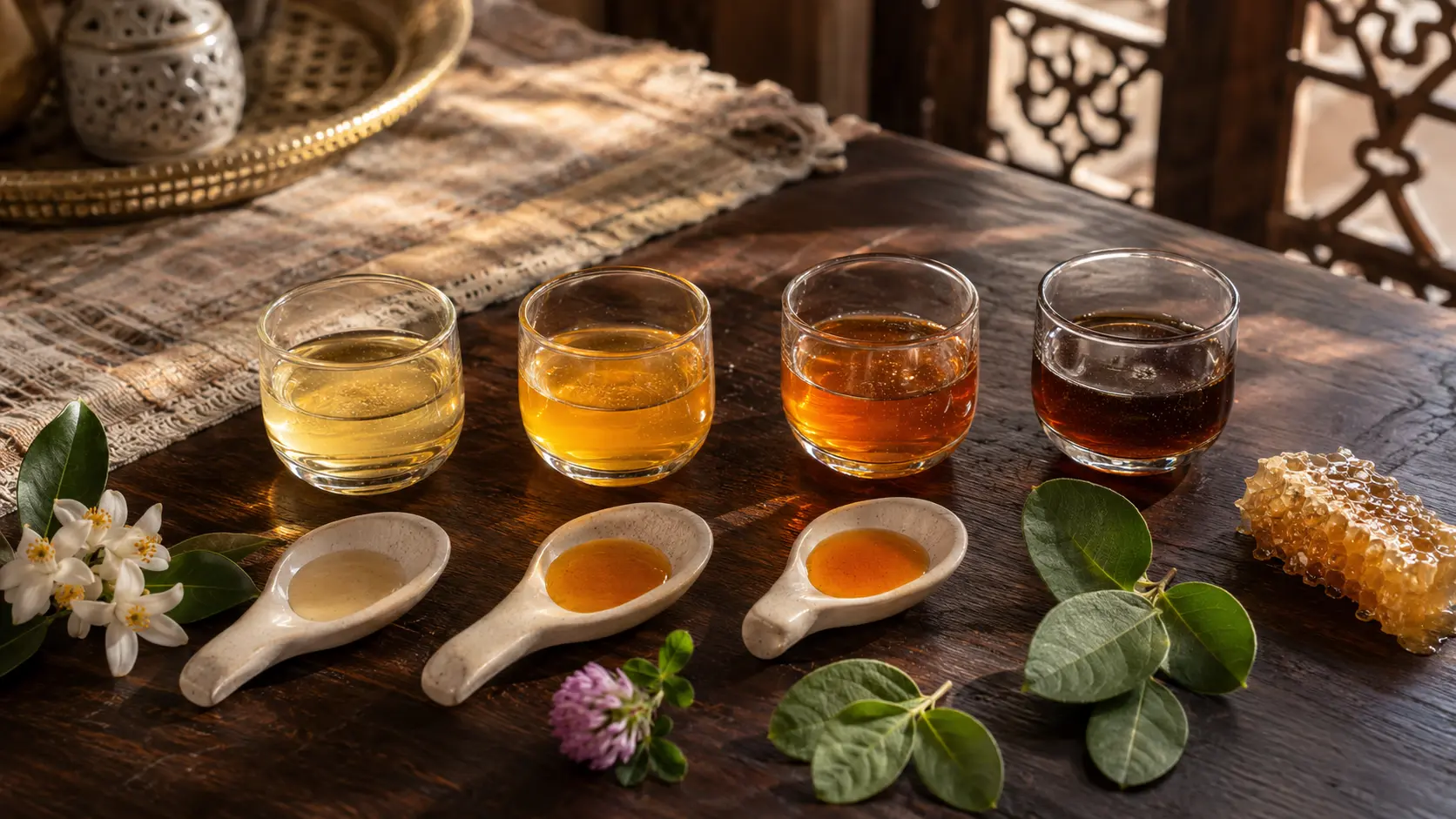
Before looking for a final answer, it helps to understand what varies naturally and what needs stronger evidence.
The name may cover a seasonal spectrum of plants, making region, date and batch description more useful than a fixed flavour expectation.
The complete picture
Honey names around the world usually describe dominant flora, a region or a grading convention, yet the real sensory character still depends on season, apiary and handling. When reading this subject, the product description should remain consistent with its presentation and use, and any potential benefit should stay within the boundaries of food rather than treatment.
How should the evidence be read?
A fair comparison starts with flavour, aroma, texture and declared origin, not an absolute league table. Some names use local grading systems that deserve explanation before a premium is paid. For this topic, the central point is: The name may cover a seasonal spectrum of plants, making region, date and batch description more useful than a fixed flavour expectation. Look for information that can be tied to a jar, batch, recipe or clear source, and do not treat one personal experience as a universal result.
A practical step-by-step approach
Begin by defining your goal for “Wildflower Honey: Understanding a Broad Name”: understanding a fact, choosing a product, adjusting a recipe or comparing two offers. Gather only the data relevant to that goal, test on a small scale and record the result. If several variables change together, the cause of the difference will remain unclear. Buy a small size first, taste it at room temperature, then note whether it suits breakfast, cheese, baking or gifting.
Mistakes worth noticing
Scarcity, price and a dark colour are not independent proof of superiority, and a medical claim does not become valid because it is attached to a famous global name. Other mistakes include comparing products of different weights or storage histories, relying on an image removed from context, or ignoring added ingredients in blends. Good transparency lets you see both what is known and what is not yet known.
Quick review checklist
- Understand what the variety name means
- Check country and harvest origin
- Start with a tasting size
- Compare intended use before price
After the review, choose the least complicated action that answers your question, then reassess after a real trial. This small step is more useful than chasing dozens of conflicting tips.
Khitam conclusion
“Wildflower Honey: Understanding a Broad Name” does not need exaggeration to be useful. Combine sensory description, written information and a credible source, while keeping realistic expectations about natural variation. Honey and bee products then become an understandable part of food and culture, not a container for unmeasurable promises.